

“Wherefore he saith, Awake thou that sleepest, and arise from the dead, and Christ shall give thee light.”
Ephesians 5:14
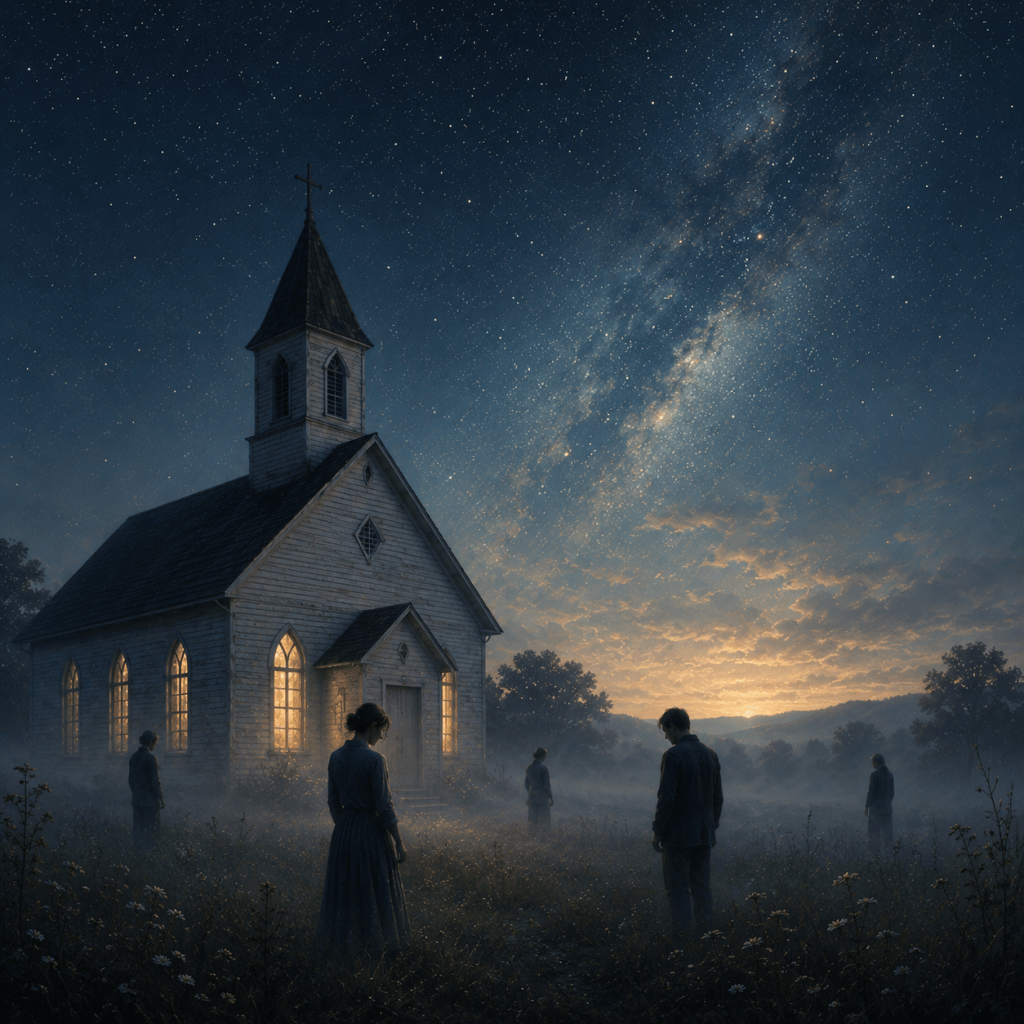
Awake Among The Dreamers
I am the granddaughter of a Campbellite Church of Christ minister. These days, some may object to the use of the word Campbellite. I do not use it to offend. Unfortunately, the distinction is necessary to avoid confusion. Campbellite was, after all, their original name that they did not seem to mind for quite some time.
In the Beginning
I grew up in a small Campbellite church of Christ congregation, my mother being the daughter of the minister. Amoung my most bewildering memories I also have some fond memories of my childhood with them. They were good people who sincerely believed they were God’s set-apart remnant. They were very careful to avoid the third verse of most hymns and dare I say, occasionally they had a great point or two about the outside Christian world.
However, they had some of the strangest ideas and inclinations. Somehow, they seemed to know who was going to hell. A random Tuesday evening drive past a steeple or a church bake sale sign would erupt into confident pronouncements that the townsfolk stood condemned. Every now and then they had the gumption and outright audacity to tell them in person of the fate awaiting them if they did not repent of their architectural design and stop peddling their baked goods to the neighborhood. Even as a child, I found this a peculiar way to share the Gospel.
Who Was Going to Hell?
How does someone go to hell for attending the wrong church? Why does the steeple guarantee your ticket to the underworld? I could never find a verse that plainly said such a thing, yet I was assured, “that is what the Bible teaches.” I don’t particularly care whether a church chooses to sing a cappella. That is perfectly fine with me. What puzzled me was the leap from “we believe instrumental music is unauthorized” to “everyone who worships with a piano is eternally lost.” That seemed like quite a jump.
The Piano Problem
I sometimes wondered where the line was. If you were standing in the parking lot of a church that had a piano, were you within damning distance of the instrument? If someone wheeled the piano outside for tuning, did the radius of condemnation expand accordingly?
These are important details. I felt like if inanimate objects could damn you, we should have these technicalities written down somewhere. Unsurprisingly, they did not agree that we should write these things down. They did not like writing things down.
When The Bible Always Agrees
They had other strange habits that thoroughly puzzled me. The Bible always agreed with them. I found that statistically unlikely given the complexities of the book. But somehow, without fail, my mother’s ideas and beliefs were always validated. When questioned, she would pick up her Bible and pull several verses from multiple places as evidence to support her thoughts. When I was old enough to pay attention, I realized that the verses she used did not usually support her as clearly as first appearances suggested. Within their own contexts, these verses regularly disagreed with her.
It was a neat trick that works surprisingly well. Isolate verses as individual pieces of information and pull them to your conclusions. It gives the impression of knowing a lot about the Bible, while every verse pulled out of context agrees with you. You’d almost have to trust someone who was always proven right by the Bible.
It was a trick that did not work for long after I started reading the verses for myself. I began to think something was seriously wrong. They did not seem to know the meaning of words.
How to Plainly Read the King James
At one point I questioned if they couldn’t read the King James version of the Bible. Perhaps it was the old English that was the trouble? I once lamented that the King James was too Shakespearean and was tiring to read after a while. My mother responded, “Oh, just take the THs off the words, then it’s easy to read.”
Taking the THs off the words is somewhat helpful, but it missed my point of navigating long sentences with big words, full of rhetorical questions and complete narratives written as flowery 17th-century academic literature. I remarked as such and was told I was the one overcomplicating it. All those things weren’t there, or if they were there, I was making them say something they weren’t saying. I was somehow adding too much meaning. I was not plainly reading.
When Is a Confession Not a Confession?
Adding to my suspicions, they regularly paraphrased more complex verses into statements that agreed with them.
What I witnessed as a child was not an inability to read the King James, nor was it youthful rebellion against Scripture. The problem was that they had learned the Bible through altered definitions. They believed they were allowing Scripture to interpret Scripture, but they were actually allowing inherited definitions to interpret Scripture. As each generation learned those same definitions, the system perpetuated itself without most people ever realizing the meanings had shifted. The sophist was long dead, but the spell he wove still clings.
“For with the heart man believeth unto righteousness; and with the mouth confession is made unto salvation.” Romans 10:10
Turned into,
Confession is necessary for salvation, but only the correct confession, the one found in Acts. Any other confession, including the Westminster Confession, will damn you to hell. You need the right confession before baptism or it isn’t valid”
To my mind they clearly couldn’t read the verse, owing to the fact that they ignored 75% of it. The word “confession” seemed to shift meaning from a spoken declaration, to the correct verbal statement, to written documents containing words you would use to categorize and affirm your beliefs.
I thought those such peculiar additions to the verse. Why did they get to add so much to that verse? If I said the confession seems to be an outward statmentt of faith, I was adding too much meaning. Again, I was not plainly reading. It was obvious what they said was there! I was choosing not to see it.
The Missing Point
Sermons themselves made little sense. I rather liked my uncle’s preaching style. He had a casual style peppered with puns and dad jokes. It pains me to say that I never understood the point of them. Anything from the Old Testament was a narrative history story that did not apply to us in any way. Everything else was the standard assembly of isolated verses pulled together to come to a conclusion about baptism or living like Jesus.
No matter what question was asked, or what topic was introduced, they all led to baptism. A sermon about a current news event somehow wound up at baptism. And if they forgot to mention baptism during the sermon, there was always the invitation to be baptized at the end of every sermon. All roads led to baptism.
The Remnant
A second, but equally important, topic was that we were the original church. All others had departed from us. They had significant pride in their worship practices being just like the original, but I noticed there was no real meaning. They just did the actions and went home. They didn’t seem to understand why they would preach the sermon or what communion was for. When I read those Scriptures and didn’t recognize us as being the same as in Scripture, I yet again had applied too much meaning. I was not plainly reading, again.
I could not grasp why they made the points they did. Why they kept bringing up the same topics. There wasn’t a class to teach any of it. We were just naturally supposed to conclude the same things they did. They kept saying “it” was so obvious, whatever “it” was.
This bizarreness stretched into day-to-day life as well. They didn’t encourage curiosity, creativity, learning, or growing in character, and their morals seemed askew. Typically considered morally bad behavior was somehow good, while normal human behaviors were bad. Telling strangers they’re going to hell if they don’t go to your church is obnoxious behavior. Manipulating people to get baptized or else they’ll go to hell is morally bad.
How to Never Be Wrong
To have people like this as your community means you grow up around adults who constantly redefine words to fit a conclusion. To never be wrong. They create confusion and fog for children. They insist you are the one who cannot read the Bible. You begin to doubt yourself, maybe God gave them special abilities? They seemed to think so. They had lingo and phrases that you were expected to know the meaning of. There seemed to be a core group of them that understood better than everyone else.
I eventually concluded I must not be Christian if they were what Christians are. Maybe that’s why I cannot understand the bible? I just wasn’t Christian. Simple enough to work out. But, the mistake I made in this conclusion was that I had not realized how far away from Christianity they were. I thought all Christians were like them. The only difference was the presence of kitchens and pianos.
The Gospel According to Sophistry
Until many years later I read the Bible and listened to online sermons, realizing Campbellism was more sophistry than theology.
My family, and many others like them, became disciples of sophists rather than disciples of Christ. They were taught sophistry instead of Christianity, specifically a form of sophistry that depends on the hearer not understanding the actual meaning of words. The sophist shifts between the listener’s assumed meaning of a word and its actual definition, creating the impression that the premises logically support the conclusion when they do not.
They were not concerned with logically explaining their conclusions, they were more concerned with being right and teaching Alexander Campbell’s bible reading method.
Campbell’s method was, at one point, the newest and greatest trend. It was based on the latest science at the time and applied to the Bible to remove what could be disagreed with. In order to find the hidden “biblical facts” and reconstruct the church with a blueprint hidden in the New Testament.
Disciples of Sophists
My family and others like them are the disciples of sophists. They were taught sophistry, not Christianity. A specific type of sophistry, one that depends on the hearer not understanding the actual meaning of words. The sophist can shift between what you think the word means and the true definition to create the impression that their premises support their conclusion.
If they do not understand the church as the universal body of believers, the physical building becomes their cognitive shortcut for the word church. They mistake the evidence of the church for the church itself.
When the building becomes the church, restoring the church naturally becomes restoring what happens inside the building: its worship practices, organization, and design.
In this way, Campbell’s call to “restore the church” is meant as restoring the practices associated with the building rather than the people who constitute the church.
Campbell shifted many other words in the same fashion, and all these generations later his followers continue retracing his steps, his practices, and his sophistry. Some men want to preach and call people to Chrust. Others, like the Campbells, wanted to win debates. They wanted captive audiences too lulled to argue back. Their concern was not to point people to Christ, but to point people to their ideas.
The Dreamers
It is as if they are dreaming. They drift through time, cheerfully condemning anyone who tries to wake them. They wrap themselves in the mist that hangs around old Appalachian churches. You feel the chill of a summer night. You hear the distant gnashing of teeth. Yet they are drawn toward the sound.
You cannot wake them to warn them of the danger. They fight to remain asleep, desperate to linger in that final dream before waking. They never consider the dawn is coming.
To walk and live among them was like walking on a floor that shifted beneath your feet while everyone else denied it was moving. Yet, if I noticed the crumbling walls or the broken windows, I was somehow disagreeing with God. Since they could not seem to notice the floor kept shifting, I kept trying to fix the floor myself. At the moment I started to get somewhere, someone would say, “You can’t have a perfect floor!” I’m trying to make the floor functional, not perfect. I want the floor to stop shifting so the building doesn’t fall apart.
Three Generations
Three generations of my family were wiped from history. They became the remnant, isolated from society and remembered as gullible people willing to shout that everyone else was going to hell.
They were taught anti-intellectualism so no one would become knowledgeable enough to catch on. Politicians and all manner of vultures found them useful for morality campaigns. They allowed predators to walk through the church doors because they were tricked into believing that baptism meant a person could not truly sin anymore. They were taught to cut family and children out of their lives if they didn’t join the Lord’s church, it’s what God wanted.
I have more memories of being taught who was going to hell than I do of baking cookies. Imagine growing up around people who were always right, by default I that meant I was always wrong.
Those Still Under the Spell
I write for them, and for those still trapped in Christian groups formed by sophistry and sustained by the distortion of reality.
I descend from a people who were captured by clever rhetoric and offered the certainty of assurance. A people who genuinely sought the truth, but found a twisted magic instead. Sophist preachers destroy families, communities, and churches. Week after week they hold their congregations captive, laying logic traps through rhetoric and distorted definitions while few, if any, hold them accountable. The damage reaches far beyond the pulpit, shaping generations who inherit confusion instead of truth.
My hope is to slow the spread of sophistry based Christianity and help others recognize what I eventually did.
If you are reading this… you might be awake among the dreamers.

